
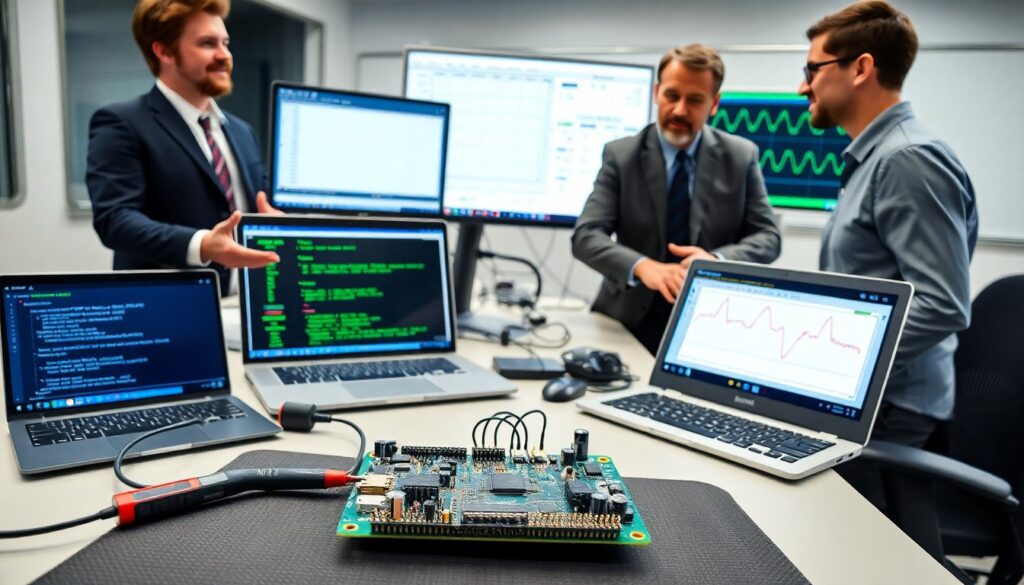
webbiz mag net embedded stm32 power management guides readers to cut energy use and extend battery life. The article explains clear steps and practical checks. It lists modes, board tips, and firmware tactics. The text uses direct language and short sentences. The goal is to give immediate actions. Readers will learn which settings reduce draw and how to measure gains.
Key Takeaways
- Effective STM32 power management relies on choosing the right power mode—Run, Sleep, Stop, or Standby—based on the task to significantly reduce current draw.
- Designers must validate power-saving gains by measuring current on the actual STM32 board under various peripheral conditions, not solely relying on datasheet values.
- Optimizing power delivery with low-quiescent current regulators, proper sequencing, and careful PCB layout minimizes leakage and extends battery life.
- Firmware strategies such as disabling unused peripherals, using interrupt-driven flows, batching tasks, and dynamic frequency scaling dramatically cut power consumption.
- Accurate current measurement before and after each hardware or firmware change is crucial for identifying the most effective STM32 power management actions.
- Documenting mode transitions, firmware steps, and test results ensures predictable, repeatable low-power system behavior and continuous improvement.
Understand STM32 Power Modes And When To Use Them
STM32 devices offer multiple modes for power saving. The main modes are Run, Sleep, Stop, and Standby. Each mode changes CPU state and peripheral clocks. Engineers should pick the mode that fits the task. For periodic sensing, they should use Stop mode most of the time. For frequent short tasks, they should use Sleep mode to wake quickly.
webbiz mag net embedded stm32 power management notes that using the correct mode trims current significantly. The team should check the device datasheet for mode current numbers. The team should measure current on the real board, not just trust the datasheet. They should test with all peripherals active and then with them disabled.
STM32 families differ in available modes and wake sources. Designers should confirm the MCU series before choosing a strategy. They should map wake sources to pins, timers, or RTC to avoid wasting power. They should disable unneeded clocks in software. They should route only necessary signals to keep leakage low.
They should also manage voltage scaling. Lower core voltage reduces power at the cost of maximum frequency. They should pick the lowest safe voltage for the needed clock speed. They should document mode transitions and test system behavior after each change.
Using this approach helps systems reach predictable low-power states. webbiz mag net embedded stm32 power management recommends logging current before and after each change. The log shows which change gave the best return on design effort.
Designing Efficient Power Delivery: Regulators, Sequencing, And Board-Level Tips
A board needs a clean power plan to use STM32 features well. Designers should choose a regulator with low quiescent current. They should prefer LDO or buck converters based on efficiency at the device’s operating range. They should size the bypass capacitors according to the regulator datasheet. They should place capacitors near the MCU power pins.
webbiz mag net embedded stm32 power management advises using an enable pin for each domain when possible. The design should sequence power rails to meet the MCU requirements. The board must respect startup order for external flash or sensors. The team should add simple GPIO-controlled switches if the system needs to power-cycle specific blocks.
PCB layout affects leakage and noise. Designers should keep high-current traces short and wide. They should separate analog and digital grounds when needed and return them to a single point. They should add small series resistors for EMI control on fast edges. They should avoid long idle traces that add parasitic leakage.
Peripherals can draw standby current through pull-ups and external ICs. Designers should add resistor values that limit current and choose parts with low standby draw. They should consider power gating for sensors and radios. They should label power test points on the board to simplify current measurement.
This method reduces idle power and improves battery life. webbiz mag net embedded stm32 power management stresses that small layout and component choices often yield large savings.
Firmware Strategies To Minimize Power: Sleep States, Peripheral Control, And Measurement
Firmware controls the MCU and so controls most of the power. Developers should start by disabling unused peripherals in software. They should stop peripheral clocks when the peripheral is idle. They should use low-power HAL or direct register writes to cut overhead.
webbiz mag net embedded stm32 power management recommends using interrupt-driven flows rather than polling. The code should let the CPU enter Sleep or Stop and wake only on needed events. The firmware should batch work to avoid frequent wake cycles. The code should group sensor reads and radio transmissions to reduce transitions.
Developers should tune timer choices. They should use low-power timers for wakes and the RTC for long sleeps. They should configure timers to run from low-speed clocks when precision allows. They should avoid running the main clock when a low-speed source will do.
They should also carry out dynamic frequency scaling. The code should run at higher frequency only for short tasks and then drop to a lower frequency. They should lower peripheral clock dividers when possible. They should remove debug prints and heavy logging in production builds to avoid extra wake-ups and CPU time.
Measurement helps guide decisions. The team should measure system current with a meter and with a high-resolution data logger. They should capture current during mode transitions and during steady sleep. They should compare numbers against the datasheet and adjust code and hardware. They should keep a short checklist of firmware steps for reviews.
webbiz mag net embedded stm32 power management shows that disciplined firmware work often halves system draw. The team should iterate and document each change and its measured effect.