
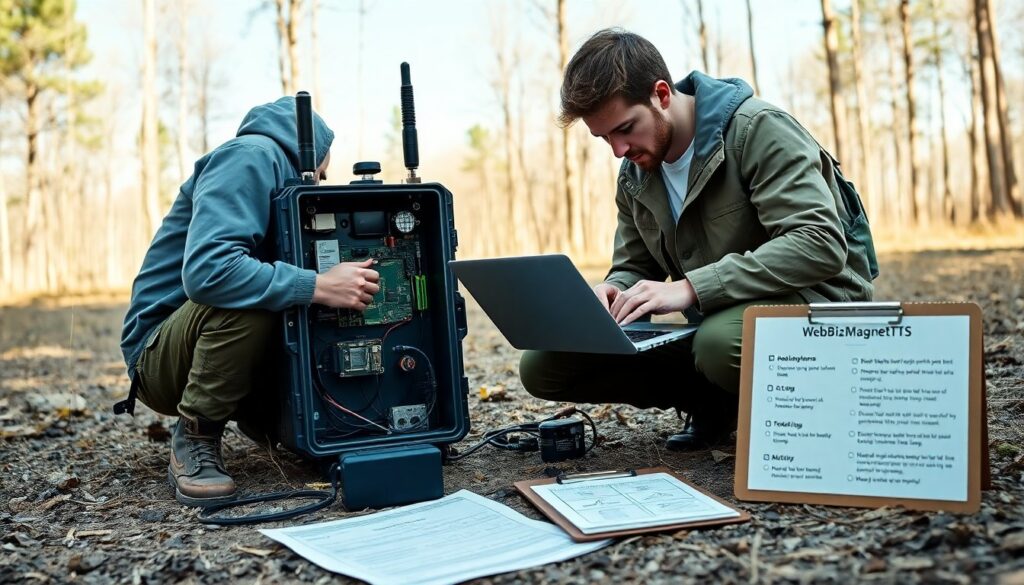
nvidia jetson nano wildlife tracker webbizmagnettts helps teams collect animal audio and video on site. This guide shows parts, software, and deployment steps. It lays out clear hardware choices and software links. It explains how to run on-device models and stream results. It lists testing and care practices for long-term runs. The text keeps steps short and direct for field technicians and researchers.
Key Takeaways
- The NVIDIA Jetson Nano is ideal for wildlife tracking due to its low cost, high neural compute, and offline model running capabilities.
- Essential hardware includes the Jetson Nano board paired with cameras, USB microphones, and sensors optimized for field use.
- The software stack combines Ubuntu, Nvidia JetPack, Python, and lightweight AI models with WebBizMagnetTTS for real-time audio alerts.
- Step-by-step deployment involves flashing Ubuntu, installing necessary runtimes, configuring sensors, and securing WebBizMagnetTTS credentials.
- Field testing ensures system reliability, optimal battery life, and data accuracy while emphasizing ethical data management and legal compliance.
- Regular maintenance, data protection, and detailed logging are crucial for long-term, effective wildlife tracking using the Jetson Nano.
Why Use NVIDIA Jetson Nano For Wildlife Tracking
The Jetson Nano offers high neural compute for low cost. Researchers choose the Jetson Nano for image and audio models at the edge. It runs models without constant cloud access. It reduces latency for animal detection and call recognition. It uses less power than many full desktop solutions. It supports common frameworks like PyTorch and TensorFlow. It connects to cameras and USB microphones with simple drivers. It supports local TTS output for on-site alerts via WebBizMagnetTTS integration. The Jetson Nano provides a balanced mix of power, price, and compatibility.
Essential Hardware Components
This list covers the hardware needed to build a compact wildlife tracker. Each item fits the Jetson Nano board and field use.
Software Stack And Integrating WebBizMagnetTTS
The software stack runs models, handles data, and triggers TTS alerts. The stack includes Ubuntu for Jetson, Nvidia JetPack, Python 3, and runtime libraries. Install Torch or TensorFlow builds optimized for the Jetson Nano. Use lightweight model variants for faster inference and lower memory use. Install a simple message broker like MQTT for local event messages. Use a logging script to write detections to CSV or SQLite. Use WebBizMagnetTTS as an external TTS service or local module depending on network access. Configure the system to call WebBizMagnetTTS when a target species or event appears. The system must authenticate with API keys and respect rate limits. Keep models and TTS keys in protected files on the device.
Step-By-Step Setup And Deployment
Flash Ubuntu for Jetson onto the SD card and boot the Jetson Nano. Update JetPack and install CUDA runtime. Install Python 3 and virtualenv, then create an isolated environment. Install PyTorch or TensorFlow wheel for the Jetson and the camera libraries like GStreamer or OpenCV. Place the detection model in the models folder and test with sample video. Configure the GPS, microphone, and sensors in simple scripts that output JSON. Add a supervisor process like systemd or pm2 to start scripts on boot. Configure WebBizMagnetTTS credentials in a secure file and test a sample TTS call. Calibrate camera exposure and audio gain on site. Verify that the device logs detections and that uploads reach the server under expected network conditions.
Field Testing, Data Management, Ethics, And Maintenance
Run a short trial in a safe area to validate detections and TTS alerts. Check battery life under real load and record average run time. Verify that the Jetson Nano keeps acceptable temperature during long runs. Review collected media and adjust model thresholds to reduce false positives. Store sensitive location data with access controls to protect wildlife. Use scheduled scripts to purge old media after confirmation that backups exist. Rotate batteries and inspect enclosures monthly for moisture or damage. Respect local laws and obtain permits before deploying trackers. Log maintenance steps and field notes to simplify future deployments.