
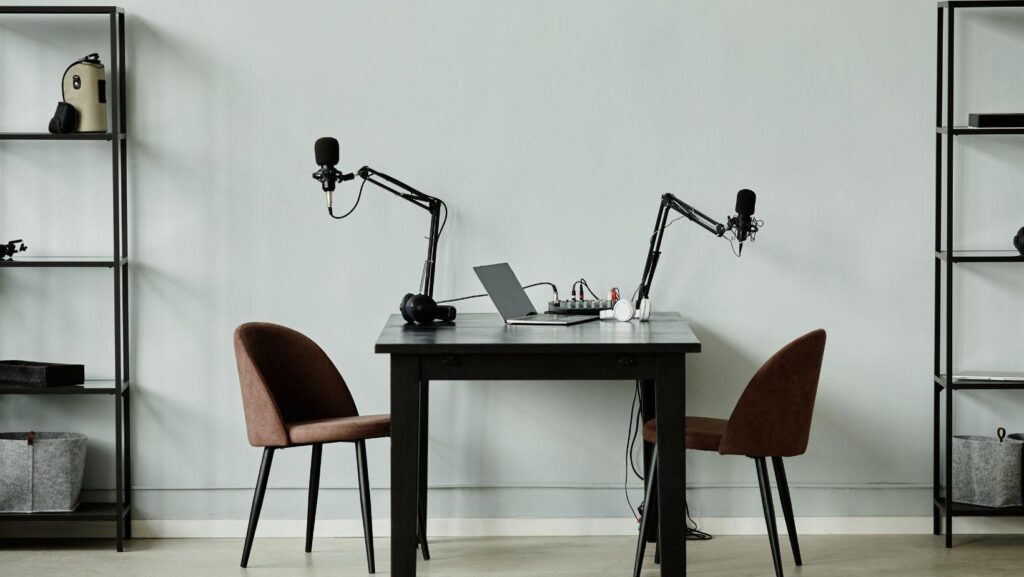
If you’re thinking of starting your content-creation journey, setting up a podcast is one of the best decisions you can make.
Not only does it channel your creative flair, but it also allows you to talk to people and learn more about different things and perspectives in the world. Another great thing about starting your podcast is that you can gather an audience from all over the world, which gives you recognition beyond borders.
However, a podcast isn’t just a fancy microphone and you talking into it; there is a lot more to it than meets the eye.
First, you must have a reliable internet connection if you wish to host the podcast in real time via a live feed. This makes it essential for your setup to include a reliable internet service.
I recommend using one that is already well-known for its service and reliability, such as Spectrum Internet. You can learn more about the plans if you reach out to Spectrum customer service, so you can work out your internet needs and budget.
Once you are done with your internet service, the next step is to gather all the necessary equipment for you to successfully start and run your podcast. Here’s all the essential gear that you need.
Good Quality Microphone
A podcast microphone isn’t exactly a musician’s microphone, but it is actually a lot more than that. You’ll be surprised to know that microphones actually come in different shapes and sizes, depending on what your intended usage is.
A microphone is the first thing that goes in the recording chain, which is why you have to be smart about the one you choose for your podcast. To proceed, it is important to know about the most popular podcast mics.
Here are two microphone types you need to know:
USB Microphones
A USB microphone is the most common kind of mic used in a podcast. If you’ve heard about the popular Blue Yeti, then you are already halfway familiar with how USB microphones work. These mics are usually condenser mics that plug directly into your computer through a USB cable.
They are ideal for beginners who want to do solo shows at the start, or even those who want to do interviews.
However, these mics are known to pick up only one speaker’s voice at a time, so make sure you are already mindful of that. If you’re looking for the best microphones within your budget, then you should check out this article by The Podcast Host.
XLR Microphones
These microphones work differently from USB microphones, since they require additional equipment to work.
You have to connect these microphones to an interface such as a mixer, preamp, or digital recorder to work. You can get these mixers in digital form too, which means you can run them through your computer, but not directly.
These mics are suited for people who want brilliant audio quality and a lot more editing flexibility. Plus, you don’t need a computer at all times, which is a great thing.
An Efficient Digital Recorder
A digital recorder is one of the best options for podcasting if you are going for superior voice quality, especially in terms of a smartphone. They give you many more settings and options so that you can tweak your audio to perfection.
On top of that, you will be glad to know that some of these recorders come with a built-in mic as well, which saves you the cost of getting another microphone. So, if you are looking for good sound quality and want to save your money on a microphone, then you should definitely look into a good digital recorder.
Powerful Computer
Since you will be recording audio and processing it, it is important for you to have a powerful computer.
Most modern computers allow you to directly record audio in the computer through a Digital Audio Workstation (DAW) like Audacity and Adobe Audition. You may also use a computer to record remote interviews through call recording options.
There are a multitude of software programs that you can use to edit and process the audio. If you can’t figure out which one to use, then this extensive article by Entrepreneurs on Fire can help you do the trick.
Not only that, but it also allows you to host your podcast in real-time, provided that you have your computer connected to a reliable internet connection. You can call the Spectrum phone number to learn more about its plans and speeds so that you can proceed with your podcast, especially if you’re looking to livestream.
High Fidelity Headphones
Many people believe that doing a podcast is just speaking in front of the microphone.
However, that is not entirely true. You have to listen to yourself and what the other person is saying so that you can ensure maximum quality in your podcasts. In that case, you must have a pair of good quality headphones so that you can make the most out of the audio.
Having a good pair of headphones also lets you monitor your recordings constantly so that you can work on the flaws the next time you record.
This also goes in your favor if you are doing solo shows in the initial phases of your podcast. You can use the headphones while you record so that you can hear exactly what is being recorded. Even if there are any issues, you can fix them right away to ensure perfection.
If you’re going for a video podcast, I recommend checking out In-Ear Monitors (IEMs) that offer higher isolation and detailed sound.
Good Quality Pop Filter
Have you ever noticed that when you’re too close to a microphone, your P’s and S’s tend to become too prominent?
In fact, the P’s produce a popping sound which can get annoying if it is too repetitive.
In that case, it’s always a great idea to invest in a good pop filter since it damps out the pop noises. Not only that, but it also allows you to move closer to your mic for greater clarity and a more intimate sound, allowing you to make the most out of your sound quality.
A Sturdy Boom Arm
Your pop filter and mic can attach to a good boom arm, which is quite useful if you want to eliminate unwanted noises from your podcast. You must have noticed that even moving your mic a little bit produces a lot of noise, which can turn into a nuisance when you are editing the sound out.
In that case, having a boom arm in your equipment is a great investment as it allows you to handle your mic without producing a lot of noise. Not only does this give you amazing sound quality, but it also saves you a lot of time you would have spent while editing.
Now that you have an extensive list of all the essential gear you need to start your podcast, it is time for you to start your research. Be sure to look into the best microphones, recorders, computers, headphones, and software so that you can bring your A-game to the world of podcasting!