
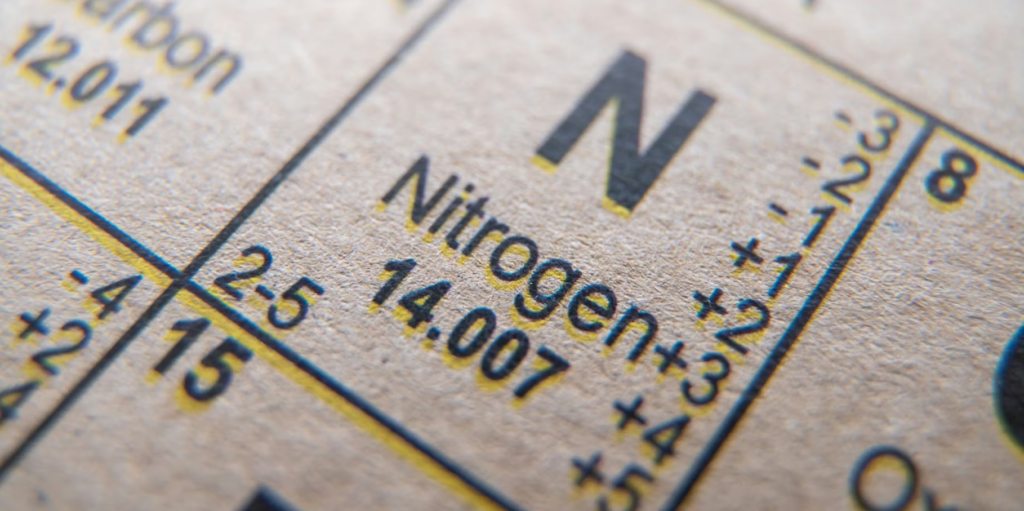
Nitrogen makes up approximately 78% of the air we breathe, yet in its purified form it has become one of the most strategically important industrial gases across manufacturing, food production, fire safety, horticulture and critical infrastructure. Its chemical inertness, dryness and consistent availability make it applicable wherever oxygen, moisture or contamination poses a risk to products, processes or people. As industrial operations become more complex and the costs of external gas supply continue to rise, an increasing number of companies are moving toward on-site nitrogen generation as a more reliable, cost-efficient and sustainable alternative to cylinder or bulk liquid supply. Presscon.com is a Dutch specialist in nitrogen generation systems, designing and building on-site nitrogen solutions for a wide range of industrial applications from their production facility in Honselersdijk.
Why Nitrogen Is Valuable in Industrial Processes
Nitrogen is chemically inert under standard industrial conditions, meaning it does not react with the vast majority of substances encountered in manufacturing, food production, chemical processing or storage. This makes it ideal for displacing oxygen wherever oxidation would cause degradation, discolouration, rancidity, corrosion or reduced product quality. Beyond product protection, nitrogen is a primary tool for fire and explosion prevention: by reducing oxygen concentration in a confined space below approximately 16%, it eliminates the conditions combustion requires, making it essential in environments handling flammable liquids, vapours, dusts or gases. Industrial nitrogen produced by modern on-site generation systems is also dry and consistent, with purity controllable from 95% up to 99.9999% depending on system configuration. This stability keeps process parameters repeatable across production shifts and is particularly important in pharmaceutical manufacturing, electronics production and precision laser cutting, where even small deviations in atmospheric composition affect product quality.
How Industrial Nitrogen Is Produced
Pressure Swing Adsorption is the most widely used technology for on-site industrial nitrogen generation: compressed air enters a vessel filled with Carbon Molecular Sieve, which adsorbs oxygen while nitrogen passes through, with two vessels operating in alternating cycles to deliver a continuous output stream. HP-PSA, the high-performance variant, adds an optimised airflow system and a patented CMS compression mechanism that extends sieve life, stabilises purity output and reduces energy consumption by 40 to 50% compared to conventional PSA or membrane systems. Where cylinder and bulk liquid supply create dependency on external logistics, variable pricing and ongoing inventory management, on-site generation produces nitrogen continuously from compressed air at the point of use, eliminating delivery dependency and reducing operating costs. For most industrial operations consuming nitrogen on a continuous basis, the return on investment is typically achieved within 12 to 18 months.
Nitrogen Applications by Industry
Food and beverage
Through Modified Atmosphere Packaging, oxygen inside a sealed food container is replaced with nitrogen, preventing oxidative rancidity, inhibiting aerobic microbial growth and maintaining colour, texture and flavour without chemical preservatives. The technique is applied across meat, fresh produce, dairy, bakery, snack foods, coffee and ready meals. Nitrogen is also used in bulk storage tanks for edible oils and liquid food ingredients, where trace oxygen exposure causes quality deterioration over time.
Breweries
Nitrogen is used to purge tanks and transfer lines before filling, preventing the oxidative reactions that compromise flavour stability. As an alternative to CO2 for liquid transfer and pneumatic valve operation, it offers a cost advantage and eliminates CO2 supply dependency. Unlike CO2, nitrogen does not dissolve into beer, making it well suited to transfer and dispensing applications. On-site generation allows breweries to produce the required gas continuously at food-contact purity without cylinder management.
Horticulture and greenhouse cultivation
In greenhouse heating systems, nitrogen protects buffer and expansion vessels from oxidation and corrosion. Water exposed to oxygen causes progressive deterioration of steel pipework, valves and heat exchangers. A nitrogen blanket above the water surface in expansion vessels prevents oxygen ingress and extends system service life. This application established on-site nitrogen generation as standard practice in Dutch horticulture and drove the early development of compact PSA generator systems.
Chemical industry
Chemical storage tanks containing reactive substances, solvents and intermediates are blanketed with nitrogen to prevent oxidation, polymerisation and moisture contamination. For process safety, nitrogen inerting eliminates oxygen-rich atmospheres in vessels and pipelines that would otherwise create explosion risk when handling flammable substances. Reactor vessels, distillation columns and transfer lines are purged with nitrogen before start-up, during product changeovers and before maintenance.
Manufacturing and fabrication
In laser cutting, nitrogen serves as the cutting assist gas for stainless steel and aluminium, preventing oxide layer formation that degrades cut edge quality. In heat treatment furnaces, nitrogen creates a protective atmosphere that prevents surface oxidation of steel components during annealing and hardening. In electronics manufacturing, nitrogen during soldering and reflow processes prevents oxide formation on component leads and PCB surfaces, improving solder joint quality and reducing defect rates.
Fire prevention and cold storage
Nitrogen fire prevention systems maintain oxygen concentrations below the ignition threshold on a continuous basis. In cold storage and freezer warehouses, conventional sprinkler systems risk freezing and cause severe water damage to stored goods when activated. Nitrogen oxygen reduction systems operate reliably at any temperature, require no water supply and leave no residue. Automated high-bay warehouses benefit particularly from prevention-mode systems that make ignition impossible rather than responding after the fact.
Data centres and ICT
Water and chemical suppression agents both cause secondary damage in active server environments. Nitrogen extinguishes fire by reducing oxygen concentration, leaves no residue on equipment, produces no decomposition products and has no electrical conductivity. In continuous oxygen reduction mode, it prevents ignition entirely. For unmanned edge computing facilities where rapid human intervention is not available, prevention-mode nitrogen protection provides a level of assurance that reactive suppression systems cannot match.
Pharmaceuticals and laboratories
Active pharmaceutical ingredients are frequently sensitive to oxidative degradation, and trace oxygen exposure during synthesis, drying or packaging can affect potency and regulatory compliance. Nitrogen blanketing of reaction vessels, storage containers and packaging lines maintains the inert atmosphere required throughout production. In analytical laboratories, nitrogen functions as a carrier gas in chromatography and as a blanket gas for sample storage, often requiring purity levels below 10 parts per million oxygen.